


Written by BCC Counselor Sheri Ho
Have you ever felt despair? Have you watched hope fade and found yourself losing heart? Or perhaps you are walking alongside someone struggling with depression, disappointment, or confusion?
The Book of Book of Habakkuk offers great encouragement and wisdom for times of despair and confusion.
When Habakkuk was written, Judah was morally corrupt, violent, and spiritually rebellious. Habakkuk suffered alongside the oppressed and cried out to God on their behalf. He deeply loved his people and felt their pain as though it were his own. He may also have grieved over the loss of spiritual renewal after the reign of King Josiah.
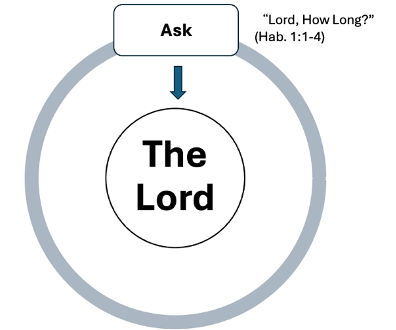
Lesson 1: Ask God in Despair and Confusion
In his deep struggles, Habakkuk cried out directly to God:
“O Lord, how long shall I cry for help, and you will not hear?” (Hab. 1:2)
Habakkuk honestly brought his questions and pain before God. At times, it even seemed to him that God was tolerating evil without judgment (Hab. 1:13).
The name “Habakkuk” may mean “embrace.” It pictures both God holding His people in love and a believer clinging tightly to God and His wisdom. Paul E. Miller encourages us to “come messy” before the Lord: “Don’t try to get the prayer right; just tell God where you are and what’s on your mind.” That is what children do — they come as they are, even with runny noses.¹
When you trust someone, you speak honestly with them. One of the first steps of trusting God is speaking openly to Him, just as many of the psalmists did. God invites us to pour out our hearts and lament before Him.
In the middle of hardship, Habakkuk lived out the meaning of his name — he held tightly to God and came before Him honestly and openly.
Lesson 2: Seek God Even in Deeper Confusion
Have you ever prayed about a difficult situation, only to see it become worse instead of better? Many of us have experienced this, including Habakkuk.
God’s answer shocked him. To judge Judah’s sin, God said He would raise up the Babylonians (Chaldeans) as His instrument of judgment (Hab. 1:5–11). Judah’s suffering would become even greater. This plunged Habakkuk into deeper confusion and pain (Hab. 1:12–17), yet he continued seeking God.
In emotional struggles, we often look downward — becoming trapped in self-doubt, fear, and despair. Or we look around — depending only on people, shutting down emotionally, isolating ourselves, or withdrawing from community.
But Habakkuk looked upward to God. He said he would stand at his watchpost and wait expectantly for God to speak (Hab. 2:1).
When overwhelmed by difficult questions, sometimes the wisest first step is to pause, pray, and reflect instead of being consumed by fearful thoughts. Cyril of Alexandria once wrote in his commentary on the Book of Habakkuk that believers in the past would quiet their minds and hearts when they desired to learn from God. They sought to rise above distractions, worries, and worldly concerns so they could peacefully listen for God’s guidance and better understand His truth.²
Habakkuk chose to anchor his mind in God’s truth instead of being ruled by emotions or circumstances. He stepped back and sought God.
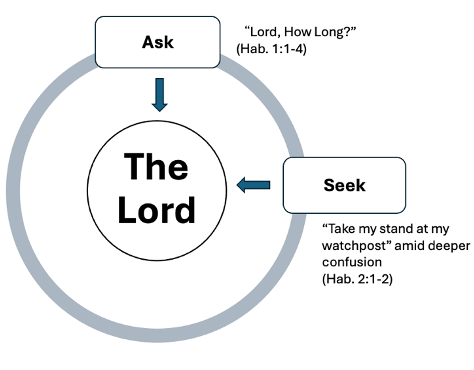
Habakkuk’s journey reminds us that faith does not eliminate questions or sorrow. He cried out honestly, wrestled deeply, and continued seeking God even when circumstances worsened instead of improving. Rather than turning away from the Lord, Habakkuk clung tightly to Him in the middle of confusion.
Yet the story does not end there.
As Habakkuk continued waiting before God, his perspective slowly changed. In Part 2, we will see how remembering God’s character and promises renewed Habakkuk’s faith and taught him to rejoice even in suffering.
¹ Miller, Paul E. A Praying Life: Connecting with God in a Distracting World (p. 20). Kindle Edition.
² Barnes, Albert; Calvin, John; Clarke, Adam; Henry, Matthew; Spurgeon, Charles H.; Wesley, John. The Ultimate Commentary on Habakkuk: A Collective Wisdom on the Bible (p. 57). Kindle Edition.





One Comment on “Biblical Hope in Emotional Distress: Lessons from the Book of Habakkuk (Part 1)”
When will we get Part 2?