


Written by Sheri Ho BCC Staff Counselor
In Part 1, we saw how Habakkuk wrestled with God in deep emotional distress. In Part 2, we will learn how remembering God during pain and trial can renew our faith and hearts, enabling us to regain strength and deeper joy.
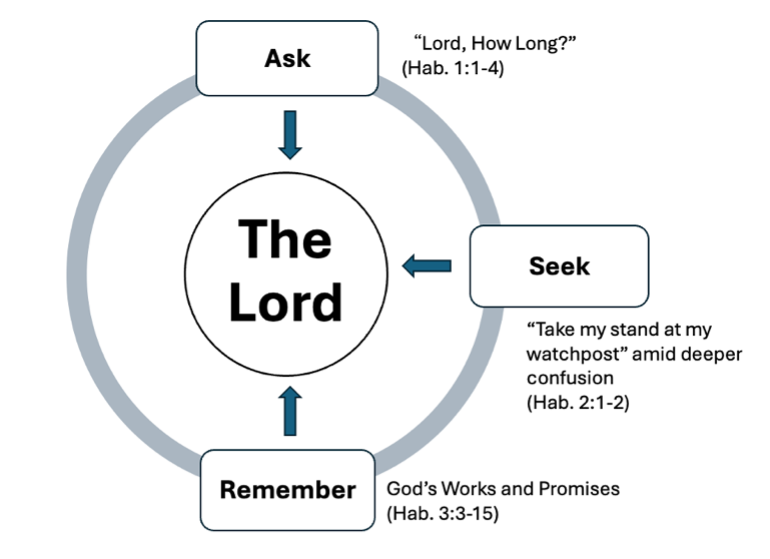
Lesson 3: Remember God’s Works and Promises
Pain tempts us to narrow our vision until all we see is suffering. It tempts us to feel lonely and become easily angered, impatient, and complaining.
The people of Judah were sinning and suffering. Habakkuk himself was in pain.
Again and again, from the beginning to the end of the book, Habakkuk humbly called upon the Lord. In doing so, he confessed:
- God is sovereign and walks with His people.
- God is still merciful and faithful, even in sorrow and confusion.
Habakkuk remembered that God is the Holy One from everlasting (Hab. 1:12), that He is pure and just (Hab. 1:13), and that He is compassionate and merciful (Hab. 3:2). He remembered God’s glory (Hab. 3:3–4), God’s justice (Hab. 3:5), God’s sovereignty over all things (Hab. 3:6–7), and God’s mighty deliverance of Israel (Hab. 3:8–16). He remembered that God listens and that His justice will come in His perfect timing.
Remembering God’s works and promises ties our past, present, and future together and reorients our hearts.
I have been deeply encouraged by brothers and sisters who demonstrated unwavering faith during severe trials. One thing many of them shared was a strong biblical view of God and Jesus Christ, along with confidence in His love. One sister once told me, “The pain was so overwhelming that I almost wanted to end my life. But one truth carried me through: Jesus Christ died for my sins, and God truly loves us” (Romans 5:8).
What truths about God and Jesus have sustained you during seasons of suffering?
Habakkuk humbled himself and remembered God’s faithfulness and love.
Lesson 4: Rejoice Despite Circumstances Because of Salvation
Habakkuk cried out to God, waited for Him, remembered His works, and held tightly to Him through confusion and suffering.
Then God gave this promise:
“The righteous shall live by faith.” (Hab. 2:4)
While in pain, suffering may feel like the biggest reality in life—but it is not. Sin is a greater problem than suffering. God will judge evil and give eternal life to those who trust in Him. Pain and suffering will not last forever.
While discussing Habakkuk with one of my counselees, she said:
“If Jesus Christ has already overcome my greatest problem—my sin and separation from God—then He will also give me strength for the other struggles in my life.”
Habakkuk knew God’s promises and salvation, and his faith was renewed. Even though “the fig tree should not blossom…” (Hab. 3:17), he still declared:
“Yet I will rejoice in the Lord; I will take joy in the God of my salvation.” (Hab. 3:18)
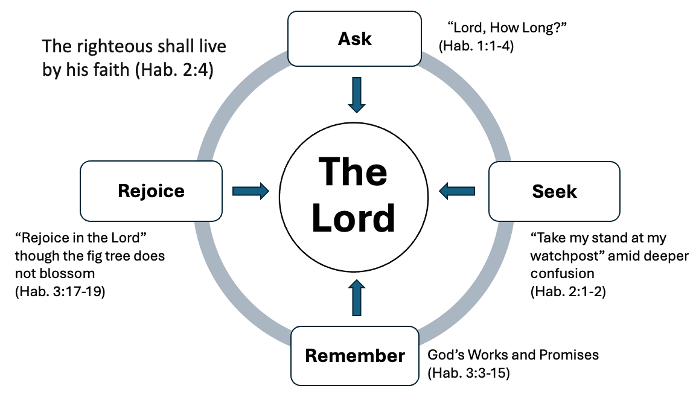
The fig tree, vine, and olive tree were symbols of God’s blessing in the Promised Land (Deut. 8:7–8). Yet even when visible blessings disappeared and circumstances worsened, Habakkuk chose to rejoice in God Himself and adopt a God-centered perspective rather than a problem-centered one.
Final Encouragement from the Book of Habakkuk
Habakkuk declared at the end of the book:
“The Sovereign Lord is my strength; he makes my feet like the feet of a deer, he enables me to tread on the heights.” (Hab. 3:19)
A deer is not a strong animal; it is often the target of wild beasts. However, God grants it slender yet powerful legs, enabling it to leap swiftly, climb to great heights, and reach safer ground.
God knows your current difficulties, and He cares for you. He will make you like the deer—though inherently weak, you will be able to traverse difficult terrain and ultimately reach the safety of the high places. The source of your strength lies in the Lord, not in your own abilities, resources, wealth, or anything else in this world.
If you are currently experiencing trials and pain, talk to a Christian friend, ask for prayer, and become connected to a church community if you have not already done so. These are among the many means of God’s grace to us.
Biblical Hope in Walking with Others
Habakkuk’s journey reminds me that it is often unwise to tell hurting people simply to “rejoice” while bypassing the process of asking, seeking, remembering, and wrestling with God.
Habakkuk wrestled honestly with the Lord. As we walk alongside others, we should patiently give them space for questions, prayer, grief, and seeking. It is helpful to encourage them to honestly express their sorrow, confusion, and emotional struggles before God. We can plead with God alongside them and come to Him together.
It is also important to help them avoid becoming trapped in overwhelming and destructive thought patterns. Habakkuk set a good example of anchoring thoughts and emotions in God’s truth, even when the mind is clouded with questions. We enter their world by listening carefully and seeking to understand their hearts, motives, and ways of thinking. In doing so, we create pathways for the gospel to shine into wounded and messy places.
Finally, we should help one another remember God’s works and cultivate gratitude, especially during hardship. Gratitude softens and humbles the heart, turning us away from self-focus and back toward God.





One Comment on “Biblical Hope in Emotional Distress: Lessons from the Book of Habakkuk (Part 2)”
This has been a powerful series. Thank you for sharing Habakkuk, a little noticed but amazingly helpful book for those suffering in this moment of time and space. What hope comes by meditating on the goodness of the Lord!